The Story of the Soldier’s Home Cemetery Orting WA

Copyright – Optical Reflex/Ray Elliott

In my last Orting post I referred to some of the residents of the Orting Soldier’s Home Cemetery, but the cemetery itself has a story to be told; it wasn’t always such a place of peace and refuge. In their 1987 book, Orting Valley Yesterday and Today: Including McMillin and Alderton, authors Mardel Robins, Alice Rushton and Louise Koehler, (writing under the name of Ms. Adventures), presented the saga of the cemetery itself.

Originally, the cemetery was located in the area now used as the baseball field; a nice, flat, area which might appear a perfect location for a cemetery.  Unfortunately, the water table is about two feet below the surface in that spot, which meant that our departed honored military personnel were effectively receiving an aqua-burial.  Many found this to be unacceptable – so much so that residents were choosing to be buried elsewhere.  In the early 1900’s this led to an attempt to move the Home.  Fortunately, two Orting businessmen—J. C. Taylor and James O’Farrell—came to the rescue and arranged to move the burial ground to a new location and in 1905 Paul Koehler became the first person to be buried there.

Mr. O’Farrell bought the land and made the necessary improvements to make it a perfect location.  He effectively became Orting’s first undertaker and owned and maintained the cemetery for the next twenty years.  After twenty years he left Orting and leased the land to a person, or persons, unidentified, who failed to maintain the property and even managed to lose all of the records.  According to Ms. Adventures, “…in a few years, the record states the cemetery was in worse condition than when [O’Farrell] had bought it.”

The town of Orting bought the property in 1937 and began the arduous project of restoring it.  Again, as per Ms. Adventures, “According to Margaret Groff, the Town Clerk of that time, ‘the whole thing was a mess.’”  Because the records were missing, they had no way to verify who had purchased plots or who was buried where.  A map was eventually made by, “two town employees who literally crawled all over the grounds, measuring and getting names from tombstones.”  If you go there today, you will see a well-kept, peaceful resting place.

Copyright – Optical Reflex/Ray Elliott

Hidden and almost lost to view under the growth of trees and vines, mere feet from south side of Orting-Kapowsin Hwy. is an old stone stairway leading up into the cemetery, forgotten it seems, since a newer drive in entrance was built.

Copyright – Optical Reflex/Ray Elliott

Directly across the Orting-Kapowsin Hwy. there is still productive farmland, but it seems to be being devoured by housing developments. How long can it hold out? Time will tell, but my belief is that the developments will win in the end.

Orting, like many other small cities, is bound by Urban Growth Boundaries set as a condition of Pierce County’s 1990 comprehensive plan for growth management, RCW title 36.chapter 70A. As a result, the only expansion of commercial properties within the city must come at the expense of farmland, and much of the productive farmland in the Orting Valley is already under houses and asphalt – with more about to be paved over.

You can see more of my photography at Flickr.

Shifting gears for a moment, I have been looking for blogs and websites about the towns I spotlight to provide a broader perspective and perhaps some fun stuff; when I find them, I’ll post a link.  I recently ran across a blog called Orting Valley Flyers, which is a model airplane group in the area.  
Lunch at Joe’s in Bucoda WA

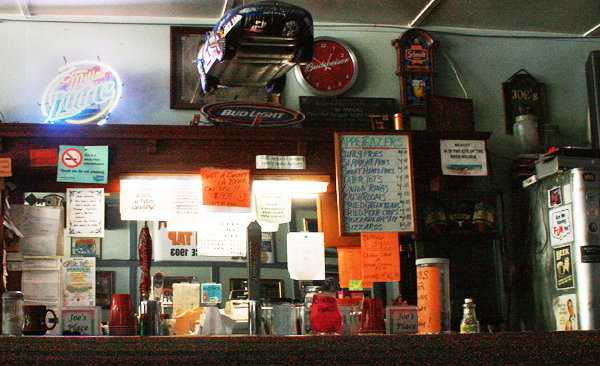
As promised, I spent Wednesday taking a trip back to Bucoda, just so I could say I ate at Joe’s Place.   Well, that wasn’t the only reason, but I did have a top notch patty melt at that establishment.

Joe’s is unique, it has been owned and operated by the Wall family for the last 115 years.  Currently it is owned by Robert Sr., who drops in daily to make sure things are copacetic, and managed by his daughter-in-law, Judy.

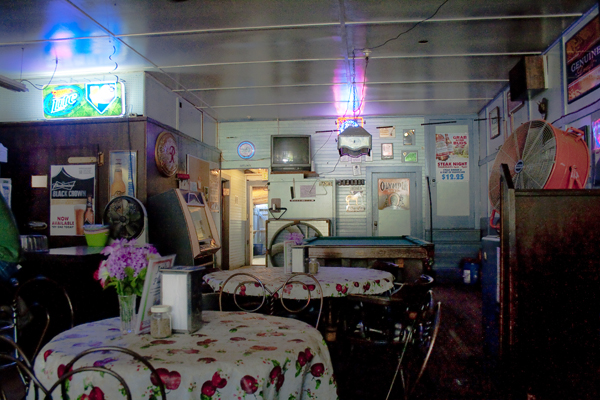
Joe’s Bar
Copyright – Optical Reflex/Ray Elliott

The dining room is in front, with one table and several seats at the counter by the grill.   The remaining area is the bar and it resembles many, time-worn, small town bars throughout the west.

Wanna play pool?
Copyright – Optical Reflex/Ray Elliott

When I walked in at about 12:30, there were two or three guys at the bar who appeared to be regulars.  Of course, in a town this size most anyone there would be a regular.  One in particular appeared to be stationed there for the day; newspaper, bag of candy…even brought his own fly swatter.  A while later a man and what I believe were his sons sat up front and ordered Jumbo Joe Burgers.  Judging from the conversation I heard, these burgers have everything you can think of on them…twice.  A tall, shapely, blond woman with pigtails came in and sat at the counter, but she wasn’t there for the long haul and we were joined by a gentleman who, like myself, had been in town once before some time ago.

After the long drive on a hot day a beer was a must and Joe’s still carries Oly on tap.  Some of you may have been around when Olympia Beer was actually made here, in Olympia…well Tumwater to be absolutely accurate.  Joe’s has perhaps the oldest continuous acct. with the company having maintained their account with Olympia since 1898, even after Pabst took over and moved it away in 1984.

Copyright – Optical Reflex/Ray Elliott

Jean was running the place while I was there, “Mean Jean,” to kids who come in and shoplift.  She ran a mean grill, and, was helpful with some historical insight – she knows a little about the place, she’s been working there for 25 years.   She told me that she’s 80, but I’m not buying it.

The original building that housed the restaurant burned down in 1930, but the original bar was saved. This would be the same bar Joe Wall died behind as he worked.

As per regulations that followed, the current building is concrete.  The pool table shows the wear of many a game, the many fans around the room tell the story of hot days with no air conditioning and the pictures on the wall tell the story of the Joe’s and a bit about Bucoda.

If you’re looking for a spotless new tavern with sparkly everything, don’t bother stopping in, but if you’re passing by with a dry throat or a belly full of hungry, and you want the feel of history around you while you take care of all that, stop in and have a bite and a brew.  I’d recommend the Oly…and leave Jean a good tip.

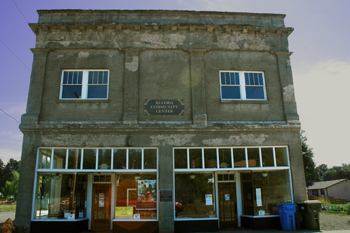
After lunch, I spent some time driving around town, and it really doesn’t take that much time to drive around town.  Most obvious are the improvements that have been made to the Odd Fellows Hall—now the community center—since I was there four years ago.  Nice to see.

Now the Bucoda Community Center Copyright – Optical Reflex/Ray Elliott

community center side for blog

Looking good!
Copyright – Optical Reflex/ray Elliott

Following Jeans directions, I found the site of the infamous Seatco Prison, now commemorated only by a stone monument and bronze plaque.  I’ve also discovered that I’ve been pronouncing it wrong; it’s not “seat-ko,” it’s “se-AT-ko.”

The mills, the manufacturing, logging, mining—all gone; but the town goes on.

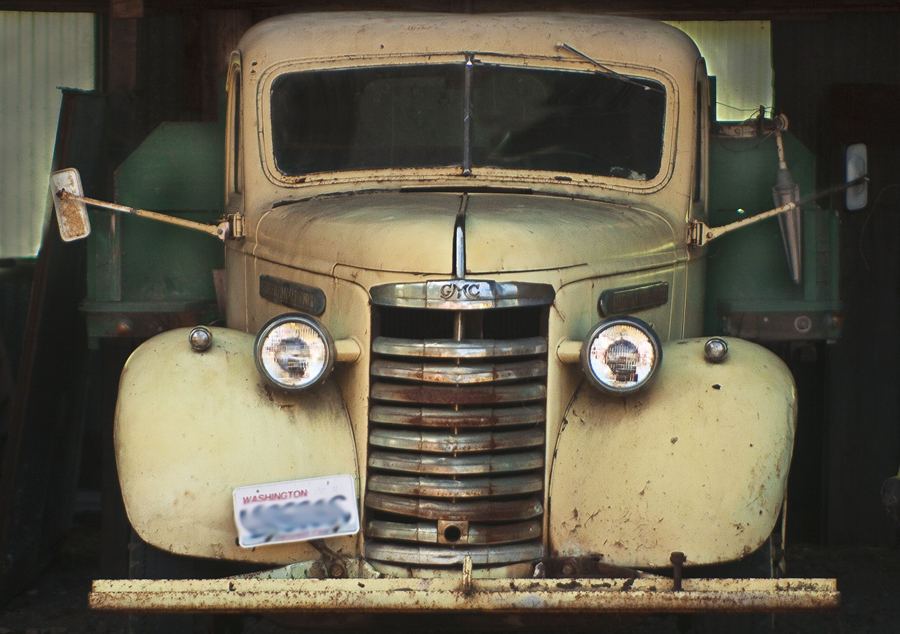
1940 GMC Flatbed at rest
Copyright – Optical Reflex/Ray Elliott

I leave you with a photo of an old-timer from town; I believe this is a 1940 GMC flatbed.  One that’s done some working.

For more of my photography, check out my photostream at Flickr.

Bucoda nee Seatco Intro. WA

I’m not nearly finished with Orting, but I felt the need to take a break and decided to do it with Bucoda.  When I first found the name I pondered over whether it was pronounced, Byou-ko-da, or Boo-ko-da. then someone sent me a note saying it was Buh-ko-da. Recently I found this at the Bucoda website, “During the Regular Town Council Meeting on September 10th The Town Council Adopted a Proclamation for the name BOO-CODA for the month of October.  Wherever possible, within and promotional item, BOO-CODA shall be the Town Name in order to create a branded identification for Bucoda, Washington.” So ends the cogitation on this subject.

Located between Centralia and Tenino on Hwy 507, along the Skookumchuck River in Thurston County, WA, it was named using the first two letters of the names of three of the founders of the city, James. M. Buckley, Samuel Coulter and John D. David.  Not the most imaginative method, but it worked.

Aaron Webster Arrived in 1854 and was the first settler at the site.  He established a small saw mill, Apparently also had a farm which he sold to Oliver Shead. The original name of the town was Seatco, and I’ve found two explanations of how it came to have that name. First, that the Indians gave it the Chinook name which meant, “ghost,” or “devil,” when they saw  Mr. Webster’s saw mill eating up the trees.

According to Indian legend, Seatco is the evil one; demon of the dark forest.  In the form of a large Indian, he robs traps, breaks canoes, steals food and goods and when bodies are found dead without explanation, their deaths are attributed to him.  In short, he is responsible for all unexplained bad things.  I think this explains how they felt about Mr. Webster’s saw mill.

The second. according to Neal Corcoran, one time mayor of the town, is that Oliver Shead chose that name and that it was probably a reflection of Shead’s personality.  More on Mr. Shead and why the name might apply later.

Probably the most documented piece of history relating to this little town is that it was the home of the first Washington Territorial prison.  Seatco prison deserves a whole post, or maybe two, all to itself.  For the moment I will merely say that it was called, ” Hell on earth,” and Mr. Shead figured prominently in its reputation.

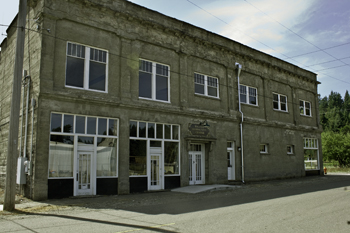
Poured concrete Odd Fellows Hall, 2009
copyright-Optical Reflex/Ray Elliott

Bucoda Odd Fellows Hall 2009
Copyright – Optical Reflex/Ray Elliott

I visited Bucoda in 2009 on a whim.  The main building, and the one that caught my eye, was what turned out to be the Odd Fellows Hall; unique in that it is a two-story, poured concrete building. Recently I read that there has been some renovation done to this building, one more thing to check out.

Officially incorporated as Bucoda on June 7th, 1910, this little town has a rich history in the coal, timber and railroad industries and as I further research and photograph it I will post more information about this.

According to an undated newspaper clipping, from an unidentified newspaper languishing in a file at the Tacoma Library, “In its heyday, Bucoda was a town of 400; saw mills, two coal mines, box factory, shingle mill, brickyard, door factory. Town consisted of 2 churches, 3 general stores, drug store, 2 barber shops, 2 pool halls, 5 saloons. Fir Tree Saloon, still standing in ’65, had been converted into a church. Had railroad passenger and freight station. Blacksmith shop. Seatco prison, 60×120 feet, two stories but had been converted to town hall and civic center. Became a liability in 1936 and was torn down.”

The other prominent structure on Main street is Joe’s Place, which advertises good food. Joe’s, it is said, has been in operation since the aforementioned heyday.  I didn’t get the chance to try the food, but I will be making the trip back soon.

Joe’s Place, Main St., Bucoda, WA
Copyright – Optical Reflex/Ray Elliott

As I noted in my first post, not every photo will be on subject, and this one is a favorite of mine that I took a few miles up the road on this trip.  More on Bucoda at some future date.  Meanwhile, if you’d like to see more of my photography, visit my photostream at Flickr.

1948 Dodge Club Coupe at rest
Copyright – Optical Reflex/Ray Elliott


Onward with Orting WA


IMG_0015

Entrance to Garfield Hall copyright by Optical Reflex/Ray Elliott

IMG_0042a

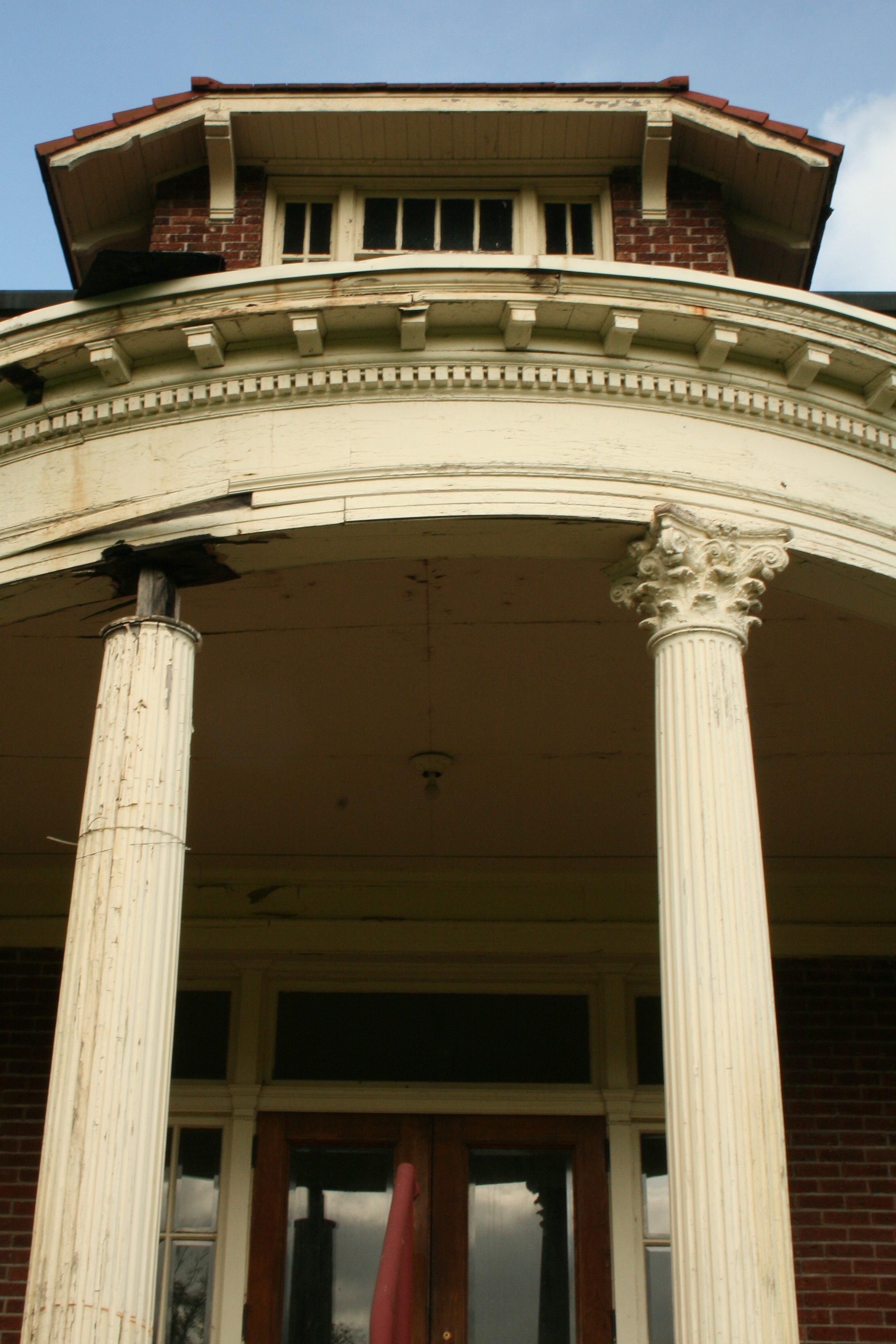
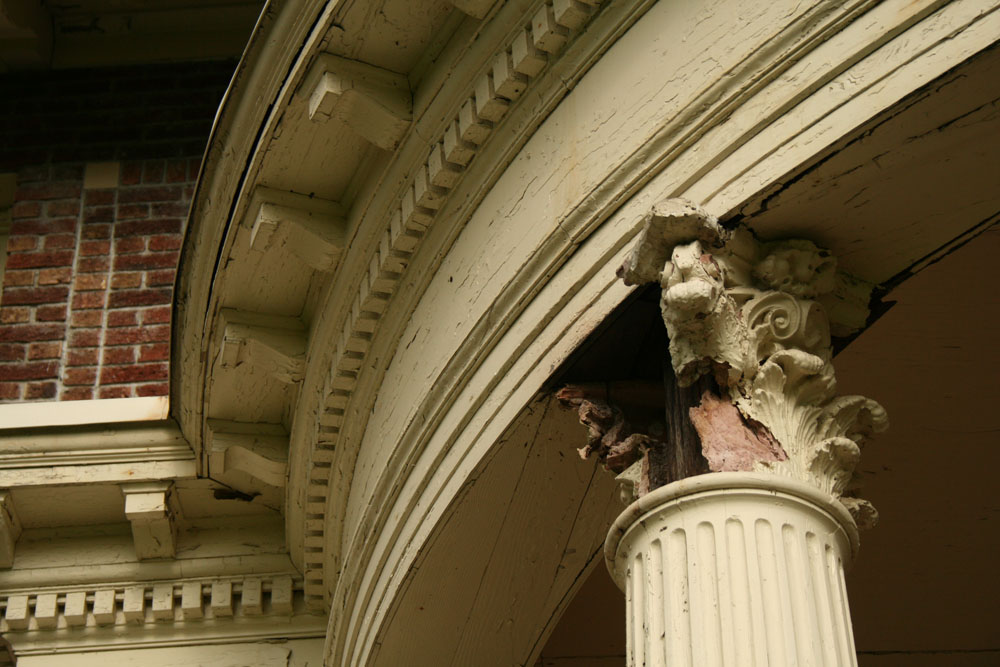
Portico at the entrance to Garfield Hall
copyright Optical Reflex/Ray Elliott

As I wrote my last post, I was wondering about the fate of Garfield Hall.  When I was there in 2008 there was talk of razing the building due to the cost of renovation.  I contacted the Washington Dept. of Veteran’s Affairs and found that the plan is for renovation, however,when that might happen is uncertain; funding has not yet been found for the project.

Among the residents who passed their last days at the Soldier’s Home were: Joseph Marion Gale, who passed away at the age of 77 in 1913.  Mr. Gale, born in Illinois, was a teacher, a newspaper editor and a soldier in two Indian wars and the civil war.   And Isaac Newton Hall, the last living soldier from the Grand Army of the Republic, who passed away in Oct. of 1940, as well as Medal of Honor winner, Sgt. William H. Sickles.

William Sickles        Photograph credit:  Home of Hero’s.com

William H. Sickles was  born Oct, 7, 1844, at Danube, New York, son of George and Eliza Sickles, and brother of Gertrude.  William joined the service at Columbia County, Wisconsin at the age of 16.

According to the Congressional Medal of Honor Society, while a member of Company B of the 7th Wisconsin Infantry,  he was awarded the Medal of honor after he,  “With a comrade,” Corporal Albert O’Connor , ”attempted capture of a stand of Confederate colors and detachment of 9 Confederates, actually taking prisoner 3 members of the detachment, dispersing the remainder, and recapturing a Union officer who was a prisoner in hands of the detachment, “ at Gravelly Run, VA, March 31 1864. Sgt. Sickles and Corporal O’Connor, also a Medal of Honor recipient, both ended their lives at the Orting Soldier’s home. 

Although I have been unable to determine exactly when, Sgt. Sickles married Jennie E. Craley and they had two sons: Lewis, born in 1869, and Claude, born in 1877.   Jennie died in 1932, Sgt. Sickles outlived his compatriot, Corporal O’Connor,  by ten years, dying September 26, 1938 at age 93.  He was the last remaining Medal of Honor winner of the civil war.  Corporal O’Conner died April 3rd, 1928 and both remain in the Orting Cemetery.

More examples of my photography are available at my Flickr photostream.

Sgt. William H. Sickles copyright Optical Reflex/Ray Elliott

An Outing in Orting WA

Orting – According to the 2011 census, population 8,632.  This little town lies at the base of Mt. Rainier, directly in the path of the lahar that would occur should that venerable mountain decide to erupt.  Yet it has rested there since Frederick E. Eldredge’s town plat was officially incorporated as a town on April 22, 1889.  Discounting the fact that it belonged to the Indians prior to 1854, the land was first owned, by way of donation land claims, by Daniel Varner, Henry and Margaret Whitesell, Thomas Headley, Daniel Lane. George Gunson bought Varner’s claim in 1861.  By 1880 the land had been abandoned and was claimed by Fred Eldredge.

Soldiers home for blog

Orting Soldiers Home, Garfield Hall portico.
Copyright-Optical Reflex/Ray Elliott 2008

There is little left of historical Orting, but there is the Soldier’s Home .  It has served its original purpose for 122 years as of June 25th.  The assumption might be that the home was of Federal origin, but not so.  It was created under Washington State Constitution to provide for Civil War vet’s who had found their way west in search of the opportunities that were so well publicized, truthfully or not.  The provision, “The legislature shall provide by law for the maintenance of a soldiers’ home for honorably discharged Union soldiers, sailors, marines, and members of the state militia, disabled while in the line of duty and who are bona-fide residents of the State,” created the Home which is run by the Washington State Department of Veterans Affairs today.  It has been home to vet’s from the Mexican War, Indian War, Civil War, Spanish-American War, both World Wars, Korean War and Viet Nam.  If it isn’t already, I sure it will be providing a home and care for vet’s for our conflicts in the Arab countries as well.

Entrance to the old building,  2008

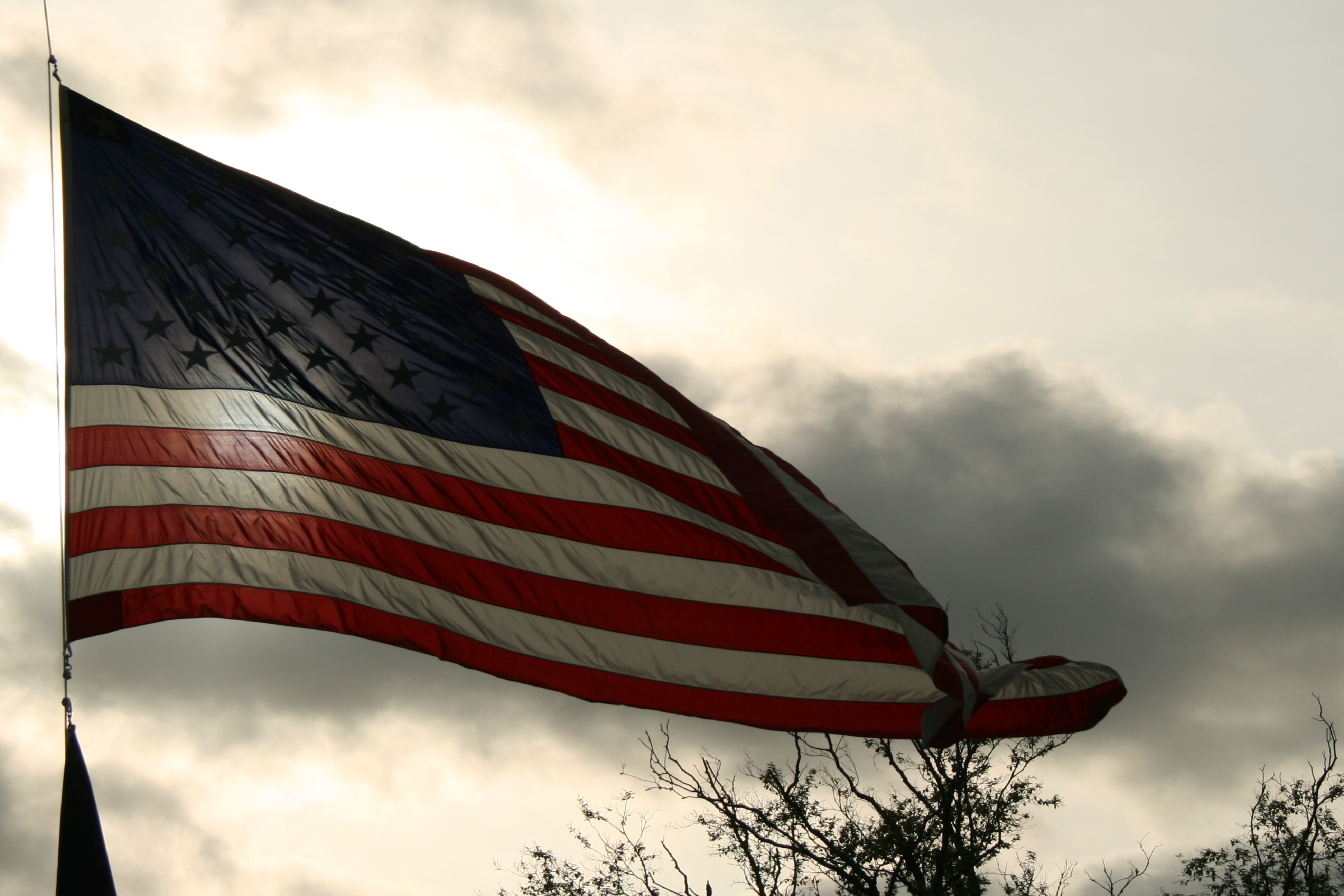
Old Glory at the Soldier’s Home
Copyright-Optical Reflex/Ray Elliott 2008

Hoc initium est – This is the Beginning

Featured

IMG_1541a

1937 Oldsmobile
Copyright – Opticalreflex/Ray Elliott 2008

My intention is to present stories.  Stories that tell about the places I have been and people I have found interesting, either currently or historically; a little history, a little fun stuff, gossip, legends, people…what ever pops into my head.

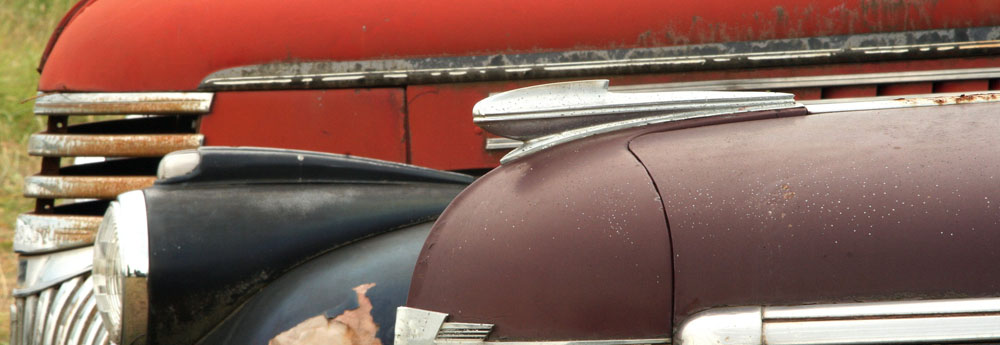
Since photography is a passion of mine, some of the stories will be picture stories.  It may be the city hall, or some random bit of abstract stuff I saw while there, or someone I talked to. And so the evolution of this blog begins. The first photo in my header is of some antique cars I found several year ago in a field in Graham, Washington.  The way they were lined up next to each other reminded me of old men, sitting on a porch, reminiscing.

I have a thing for rusty, crusty stuff; it calls to me like it wants to tell me its history. Makes me want to reach back and see who used it; did they have fun?  What was their life like?  Were they good people, have kids, make love, work hard, have an easy life…or a hard one?  No matter how long I stare at them I always feel like the stories are just out of reach, but they never get any closer.

Come along with me and let’s see a few places together.  After this intro. post, the next post will always be the latest I’ve submitted.  Don’t hesitate to look at the older ones!