Oh! So You’re from Orting WA!

It’s a little place, really…Orting that its.  Little, but not without it’s impact on us.

There was Tony Cammarano; during the first World War he started what was to become the Mazza Cheese company when Charles Mazza took it over in 1929. Charles’ son, Louie bought the operation in 1934 and ran it with his son, Edward, and wife, Darlyne, until he retired in 1974.   Though Darlyne took over the reins, she relied heavily on Louie’s assistance until his death in 1977.

In 1963, the company was still in Orting and marketed to the Pacific Coast from California to Alaska.  Enid Bennett worked in the plant then.

In 1989 the company moved to a 95,000 sq. foot plant in Sumner processing 1.2 million pounds of milk and 1 million pounds of whey per day and was featured in a 1990 issue of Food Engineering Magazine, and then, 

Mazza Cheese plant, built in 1989

they disappeared.  In 1991 overwhelming financial difficulties led to Mazza’s sale to Beatrice Cheese which about that time became a property of ConAgra.  Today, the building houses Shining Ocean, Inc., a company specializing in Japanese style seafood products.

There was Casy Carrigan, a 1969 graduate of Orting High School, who was a pole vaulting member of the 1968 U.S. Olympic team in Mexico City.  Unfortunately, he was disqualified when his pole fell forward, breaking the plane of the bar, even though the bar remained in place.  There was an appeal claiming that an assistant actually knocked the pole forward, but the ruling stood.  That rule that was changed the following May.  The event did nothing to blunt the pride in this elite athlete’s accomplishments.

public domain pole vault photo

public domain photo

A self taught vaulter who trained without a coach, at home, in Orting. He began to seriously pursue the sport in 5th grade; his Dad would take 8 mm films of collage vaulters for him to study and his brother Andy got him into weightliftng.  In 2004 he still held the the state high school record of 17′ 4 3/4″, although he cleared 17′ 10 3/4″ when preparing for the ’76 Olympics. Unfortunately, an Achilles tendon injury ended his pole vaulting career.

In 1995 he married his wife, Dione, and by 2004 he was captain of the Long Beach, CA, Fire Dept.
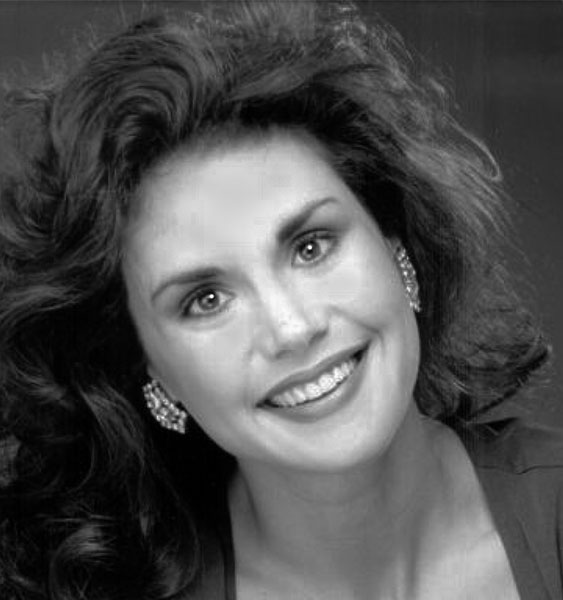
jackie mcmahon

1990 Mrs. Washington USA Pageant – Photo courtesy of Mrs. USA Pageant

In 1986, Jackie McMahon was crowned Miss Washington.  She came from an Orting family; parents Jack and Judy (Wright) McMahon were both Ortng High graduates and Jackie followed in their footsteps.  She graduated cum laude and went on to Seattle Pacific University to study law, then returned to Orting where she maintains a law practice today.

In 1990, Jackie continued her pageant activities; she was in the top 10 competitors of the 1990 Mrs. Washington America pageant.

From food, to athletics, to aesthetics and on to music.

Born to John and Doris Buckingham, in Seattle, WA, in 1923,  Bonnie Buckingham was raised in Redondo Beach, WA, later moving to Auburn.  Around the late ’60’s she lived on an 82 acre ranch outside Orting.

Her Dad, and her uncle Bert were both fiddlers and her brothers took turns playing an old flat-top Gibson Guitar.  They had it to themselves until Bonnie turned thirteen, then passed it on to her.  She stepped up the game competing in local talent shows, winning her first at Seattle’s Rialto Theater.

More talent shows followed; touring the region with a musical review during the depression she honed her skills and developed her talent and by 1942 she took the stage name Bonnie Lane.  She studied with several prominent local pickers, including Paul Tutmarc. By 1943 Tutmac, 27 years older than Bonnie, became not only her instructor, but her husband.  They were together until 1955 and had daughter Paula, (who became a performer in her own right), in 1950.

Working together, Bonnie and Paul were recruited into a country group called the K-6 Wranglers who had a radio show on KVI from 1944-1947.  They played venues like the Eagles Nest Lounge–above the old Eagles Auditorium–and the Silver Dollar Tavern. Bonnie also guested with several orchestra’s; Abe Brashen’s, Wyatt Howard’s and Norm Hoagy’s as examples.

Record deals, concert dates with folks like the Everly Brothers, the Del Vikings, Jerry Lee Lewis and others followed.  Appearances on Dick Clark’s American Bandstand, Gene Autry’s Melody Ranch and the Grand Ol’ Opry; even the Ed Sullivan show.  She played with Eddy Arnold, Johnny Cash, Willie Nelson, Marty Robbins…and the list goes on.

At some point she hooked up with record producer Fabor Robinson of Fabor Records.  He convinced her that she needed a more marketable stage name and Bonnie Guitar was born.  Bonnie_GuitarShe was a ground breaker in the industry, moving into numerous positions not previously open to women.  At the same time, recording tunes like; Honeycomb  and That See Me Later Look In 2007 she did an acoustic home video version of Shenandoah along with some friends and daughter, Paula, which includes conversation about playing this song for a special gig at Antoine’s, (now Mama Stortini’s), in Puyallup.

In Orting, she married Mario DiPiano and they raised quarter horses on the ranch outside Orting together, but she never fully left the music scene.  Some time after Mario’s death in 1983 she took a gig in Soap lake, WA and subsequently moved there. She lives there still; she turned 89 on March 25th,  and her music lives on.

510 S Washington Ave., Symbol of the Death of the Farm in Orting WA

510 Washington 2

510 Washington Ave.

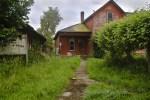
I don’t know why I developed a fascination with the Engfer farm; perhaps it was just something about the big red house at 510 S Washington Ave. that stood as a last bastion of a way of life as you entered the City of Orting.  I actually drove past it for years, always wondering who lived there, then if someone still lived there and finally who had lived there.  It wasn’t until June of 2012 that I stopped and really looked around.

As is always the case with me and abandoned houses, (or cars, or trucks, or factories….), I wanted the house to speak to me—to tell me about its history and its people, but it remained mute, so I had to go looking for answers.  I found some.  Enough to paint a small picture.  I never have met a member of the Engfer family nor had the opportunity to talk to them about their history but perhaps I will someday.

Karl Engfer and his wife, Pauline (Arndt) Engfer Came to Orting in about 1903.  Like many of Orting’s residents, they were of German descent, having migrated to the sugar cane fields of Hawaii for work and from there moved on to Orting; lots of work was advertised in Orting and by 1903 there was already a substantial German community there.   They brought with them their children, Karl Jr., Minnie, John, Edith, Dora, Bertha, Margaruite/Margaret, Elizabeth, Ernest, Max and Erna.  They were a busy couple.

The house that has held my attention, as far as I can tell, was established in 1912 by Karl and Pauline, worked, and later leased, by the family.  John took over from the lessees in 1932, presumably with his wife, Margret/Margaruite Deatry.

John and Margaret had four children; Frederick, Minnie, Herman and Martin.  According to the 1940 census, Margaret was 19 years younger than John and they lived with 4 ½ year old Fred.

In an November 2000 article from goodthings.com, I found that Fred, Barbara and their son John were hard at work providing organic produce to the local are and while they weren’t a certified organic operation according to the article, “‘It is going to take a lot to convince me to use pesticides,’ says Fred. He does not like the idea of using poison on his food.”  Apparently it was a great place for lady bugs to live and work.

They sold to Associated Grocers for awhile, but doing so didn’t leave enough to go around for the local clientele, so they gave up AG and focused on the people they knew.

In 2006 Eijiro Kawada wrote, in Tacoma’s New Tribune, that John Engfer and his mother, Barbara,  were growing just enough for themselves and leasing the rest of the land for pumpkin growing.  Fred had passed away in 2003 and they were hoping to keep the place open until their centennial year, 2012.  It didn’t happen.

For awhile, they leased part of the land to Chet Sidu, who came to America from Punjab, India in 1998 to farm.  He grew raspberries there until it appeared the land would be sold in 2008.  The deal didn’t go through, but by that time Mr. Sidu had pulled out all of his irrigation equipment and moved on.

Orting, and many other small towns are hemmed in by the boundaries they agreed to in the Washington Growth Management Act of 1990.  Since they can’t expand outside that area growth comes from paving over farm land.  In the case of the Engfer land and the Gratzner land just north of it, it provides the only space for commercial growth for the city.  Overwhelmed by the proliferation of houses, the City put a moratorium on them.   “They want to see a mix of stores and offices on that land—and the tax revenue that comes with it,” Kawada wrote.

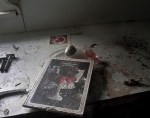
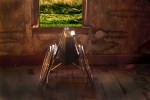
And so, this year, the Engfer place came to an end.  I was able to spend some time photographing what was left of the farm and present a gallery of some of those haunting photos.

Meanwhile, my research continues on Orting, and the Engfer’s, and perhaps some other folks along the way.

Check out more of my photography at Flickr.

Titlow Beach, WA

Titlow Beach is really part of the City of Tacoma, but it stands as a place with its own bit of history; named after Aaron Rosser Titlow, a prominent attorney in Pierce County and the Democratic Prosecuting Attorney for the County from 1897-1898.  Not a native Washingtonian, he was born in Ohio in 1858 to Aaron and Sophia J (Casase) Titlow and arrived in Washington shortly before statehood was granted, Nov. 11, 1889.

You may see Mr. Titlow’s portrait by following the Aaron R. Titlow link.

A man of means, he decided that Washington needed a good resort on the shore of Puget Sound.  To that end, he purchased 200 acres located at the far west end of 6th Avenue, in Tacoma, and built the luxury hotel which he named Hesperides, (nymphs who tend a blissful garden in a far western corner of the world in Greek mythology,) in honor of his young daughters, Lone, Marcella, Constance and S. Lucille.  What the “S.” stood for I have yet to determine, however since Mrs. Titlow’s name was Stella, Stella is as good a guess as any.

Hesperides Luxury Hotel
Used courtesy of Tacoma Metro. Parks

The original three and a half story building cost $50,000 to build, had 30 guest rooms, a formal dining room, billiard room, barber shop and a ladies parlor.  It was constructed so that each room had its own balcony overlooking the picturesque Puget Sound.  And state-of-the-art hot and cold running water; both fresh and salt water according to one source I read.

Supplied with the finest china and silver, columns of Douglas Fir supporting beamed ceilings, the dining room was illuminated by twenty-two Tiffany lanterns and equipped with a brick fireplace at one end.

This was the kind of place where guests might arrive in their Roll Royce’s, their 1917 Locomobile Coupe’s; perhaps a Stutz Bearcat, or a Duesenberg!  And think of how our colloquialisms would have been lacking without the Deusenberg to give us the phrase, “Hey!  Isn’t that a Doozy!”  

Of course lodging was provided nearby for chauffeurs, although with somewhat fewer amenities I’m sure.

To provide the best food for his guests, Titlow added a farm to the property.  Not only was the meat and produce fresh and local, he added ostriches for the entertainment of his guests.

The grounds included a swimming lagoon, which was described as crystal clear.  Apparently it was designed to fill with the high tide, then hold the water so that the sun could warm it for swimming.  By 1938 the clarity was gone – but more of that later.

By the 1920’s the luxury hotel business was waning; the hotel was used During WWI—1914-1918— to house troops.  The Hesperides was closed by the time Mr. Titlow died January 6th of 1923.

The land was acquired by the Metropolitan Parks Dept. In 1926 and the hotel was reopened as the Titlow Beach Lodge in 1928, but the age was over and the hotel never regained its former grandeur.  It closed in 1937

If you go to Titlow Beach now, you’ll see a small lodge, one and a half stories, used as a community center.  Between 1937 and 1941, the WPA was asked to demolish the hotel; the parks dept. felt they could no longer afford to maintain it.  All of the interior decor was

Titlow lodge today

Titlow Lodge Today
Copyright – Optical Reflex/Ray Elliott

auctioned off, but persistent Titlow Beach Improvement Club members protested the removal of the building.  A compromise was reached; the size of the building was reduced to the current one and a half stories. The remaining building was converted to a dining room, kitchen and living quarters for the Parks Superintendent and his family.

I must insert here a thanks to Melissa M. of the Parks Dept. for providing me corrected information.  The original story we had heard was that the top stories were removed because the building was sinking.  She shared information she had found that refuted this theory.  The reduction was about money, not gravity.

Carl Larson lived at the lodge with his wife Geneva and Daughter Betty, (who later became Mrs. Martin).  Carl was the Superintendent in 1945 and held that position until his death in 1955.  Geneva took over the position and held it until 1973.  Betty grew up on the beach and in the park.

For another look at Titlow Beach, take a look at René Fabre’s – Rainmaker –  blog, at Active Rain.

Stone Thing

Copyright – Optical Reflex/Ray Elliott

There’s more to the Titlow Beach story—Mr. Titlow’s personal history, ferries, swimming pool, the Beach Tavern— but we’ll save it for another time.  See more of my photography at Flickr.

Feather and Grass

Copyright – Optical Reflex/Ray Elliott